
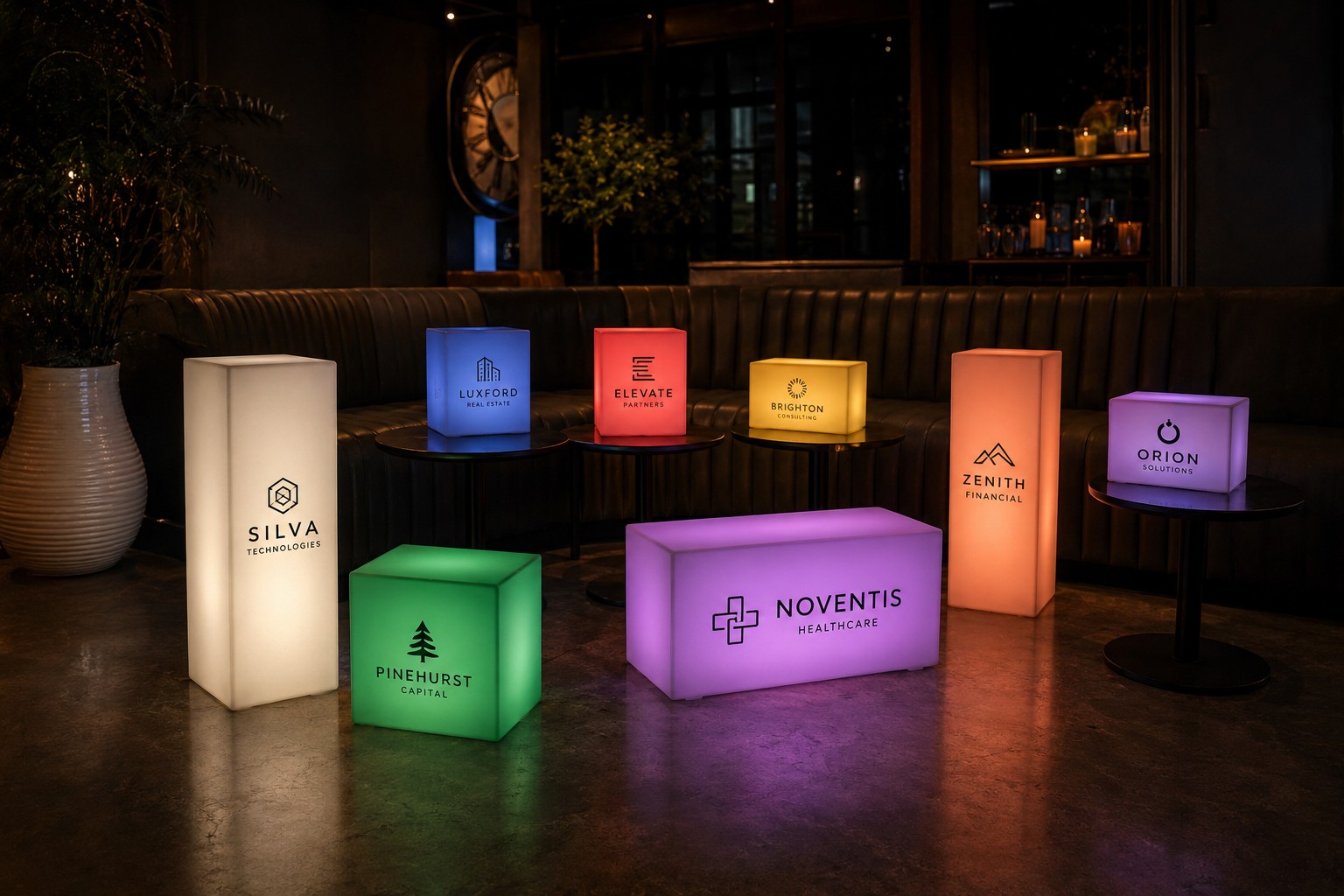
Choosing an illuminated display stand comes down to four things: where it sits, how big it needs to be, how it’s powered, and what you’re willing to spend. Get those four right and you order the correct piece the first time. Get them wrong and you end up with a display that’s too small for the space, too bulky for the position, or dead because there was nowhere to plug it in. This walks through each decision so you don’t learn the hard way on setup day.
There’s a lot of lit display kit out there, and most guides just list products. That doesn’t help when you’re stood looking at a floor plan trying to work out what actually fits. So start with the space and the job, then let those point you to the piece, rather than falling for the nicest looking product and forcing it to fit.
First, Decide Where It’s Actually Going
Position dictates almost everything else, so it’s the first question, not an afterthought. A flat wall or window with little depth behind it needs a slim piece like a Bespoke Ultra Slim LED Advertising Board at £55, whereas an open floor position where people approach from the front wants a freestanding Bespoke LED Standing Light Box at £99 that reads from a distance.
Take a small business booking a corner unit at a regional trade show. The temptation is to buy the biggest display in the catalogue. But if the stand’s accessed from one aisle only, a single well placed freestanding lit box does more than an oversized piece crammed into a tight corner. Map the position first and the shortlist gets short fast.
Then Size It to the Viewing Distance
The right size is set by how far away people will be when they read it, not by the size of your budget. A display meant to catch someone across a busy hall needs more presence than one a customer stands right in front of at a counter. Undersize it and it disappears in the space. Oversize it and you’ve paid for impact you can’t use.
A Bespoke LED Cube Light Box at £219 suits a mid distance focal point where you want a solid, three dimensional presence, while a slimmer board covers closer, flatter positions. If you’re unsure how the numbers work for your stand, our free exhibition display tools include a display size calculator worth running before you commit.
Work Out the Power Situation Early
Nothing kills a display faster than discovering, on setup day, that there’s no accessible power where you need it. Some venues charge heavily for power drops, some pop up positions have none at all, and a mains only display in a spot with no socket is just an expensive prop. Wireless, rechargeable options remove that risk entirely, letting you place the display anywhere and run it through the day on a charge.
So before you choose, answer two questions: is there convenient mains power at the exact position, and how many hours does the display need to stay lit. Match the answer to a wireless or mains piece accordingly. It’s a five minute check that saves a very bad surprise.
Match the Tier to the Job
Not every job needs a premium piece, and not every premium job should be done on the cheap. For branding, signage and most stands, the LED Lightboxes range covers it well from £55 upward. But if the display is the centrepiece of a premium brand’s presence, a reception point or a demo station, that’s where the Premium LED Displays range earns its higher price by being functional furniture as well as a lit surface.
There’s also the seating angle people forget. A LED Bench Light Box at £199 turns a resting spot into branded display space, which matters at any event where visitors get tired and look for somewhere to sit. Choosing the tier is really about honest matching, spend where the job justifies it, save where it doesn’t.
See It Before You Commit
The single best way to avoid choosing wrong is to see your branding on the actual product before you order. Every piece comes with a free, no obligation mock-up, so you’re not guessing how your logo and colours will look. Lead time is 5 to 7 days once artwork’s confirmed, prices are shown in GBP with USD and EUR options, worldwide delivery is available, and orders over £1,000 qualify for preferential trade pricing.
The Bottom Line
Choosing an illuminated display stand is a sequence, not a guess: position, size, power, budget, in that order. Let the space and the job pick the product rather than the other way around, and check power before anything else. When you’ve narrowed it down, get a free mock-up so you can see the exact piece with your branding on it before you spend a penny.