
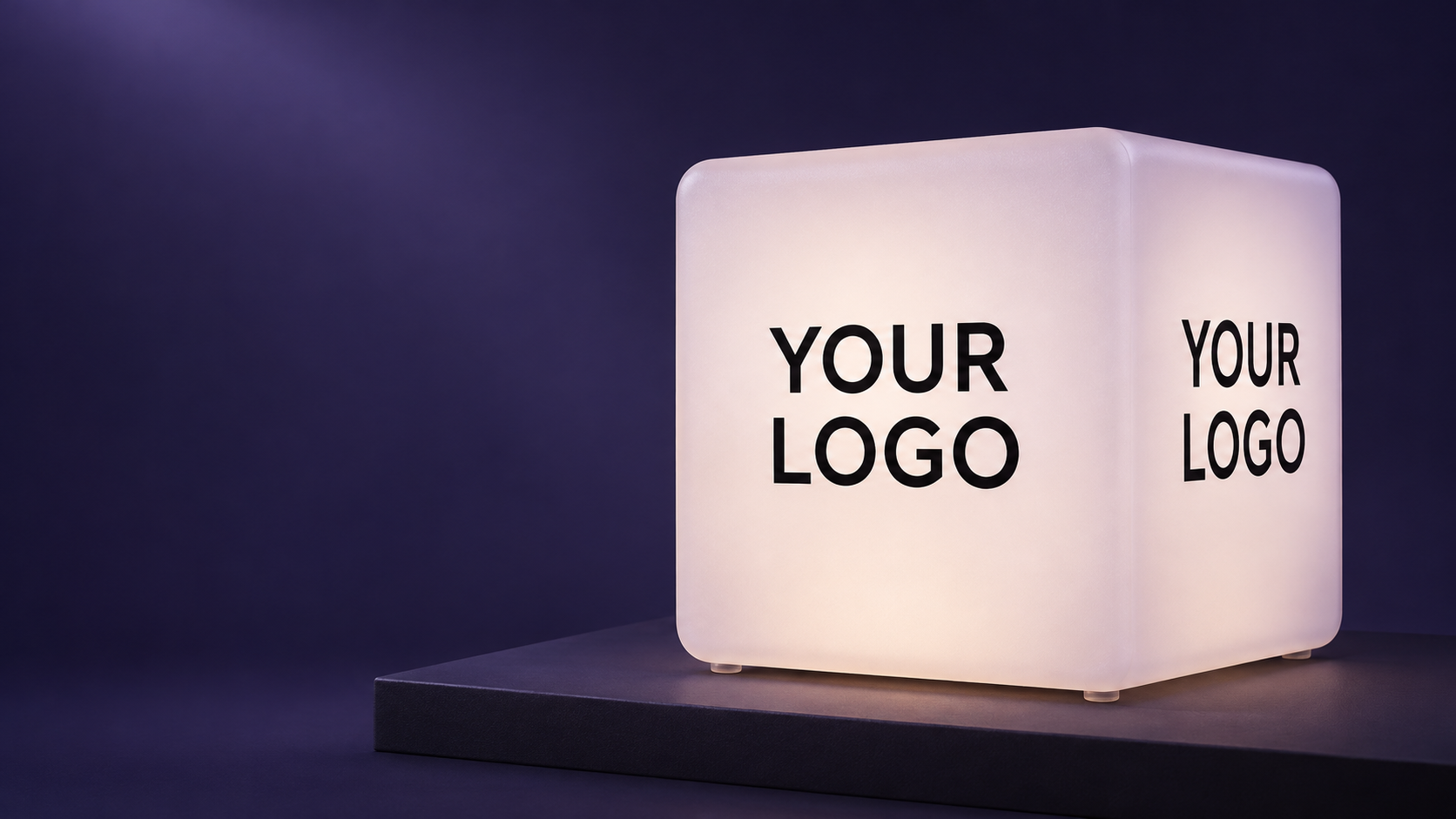
Walk into any decent trade show and you can spot, within about ten seconds, which stands spent money on their lighting and which ones printed a banner the night before. One glows. People drift towards it. The other fades into the beige wall of pull-up stands behind it.
That glow is almost always a light box. And the brands using them well are not spending a fortune, they’re just making one smart choice that the stand next door didn’t.
Here’s what actually goes on, and how to use it for your own event.
Why a lit sign beats a printed one, every time
A printed banner reflects the room’s light. A light box makes its own. In a hall full of competing stands, overhead strip lighting and a hundred other logos, the thing that produces light wins the eye. It’s not clever, it’s just physics, and it’s the reason an illuminated display pulls footfall that a flat graphic can’t.
The practical upshot: a branded LED light box earns its cost back in conversations started. More people stop. More people photograph it. And every photo someone takes next to your logo is a free bit of reach you didn’t pay a penny more for.
The pieces that actually get used
Not every event needs the same thing, so here’s the honest breakdown of what works where.
On the stand itself. A freestanding LED cube light box is the workhorse. It carries your logo, it’s visible from across the hall, and it doubles as the backdrop everyone takes their stand photos against. If you want something sharper and more bespoke to the space, a custom LED sign does the job with your exact wording.
On the tables. This is the bit most brands forget. A dinner, an awards night, a conference breakout, every table is a branding opportunity sitting empty. A small LED cube table centre with your logo turns forty tables into forty tiny billboards, and they photograph beautifully once the lights go down.
The novelty pull. If your brand has any personality at all, a statement piece does something a neat logo box can’t. It becomes the thing people queue to photograph. That’s a different play from corporate signage, but for launch parties, experiential stands and anything consumer-facing, it’s the one that gets shared.
The question everyone asks before they buy
“Can I see my logo on it first?” Yes, and you should never pay for one of these without seeing that. A proper supplier will put your actual logo onto a mock-up of the product before you commit, so you’re approving a picture of the real thing, not crossing your fingers. Boardsy does this free on any enquiry with no commitment, which is the sensible way to test an idea before it hits a budget line.
The second question is always lead time. For event work the clock matters more than anything, so the thing to pin down early is how many days from approved artwork to delivered product, and whether it arrives before your build day, not on it.
A quick word on getting it right
Three things separate a light box that works from one that disappoints. Resolution of your artwork, because a logo that looks fine on a business card can pixelate when it’s lit up at size. Colour, because backlighting shifts how colours read, so a brand red can glow slightly orange if nobody checks it. And placement, because the best light box in the world does nothing tucked behind a pillar.
Get those three right and the piece does exactly what you hired it to do. It stops people, it starts conversations, and it keeps showing up in other people’s event photos long after you’ve packed the stand away.
If you’re planning an event and want to see how your branding would look lit up, the full range of LED light boxes and displays is a good place to start, and a free mock-up costs you nothing but the time to send your logo over.