
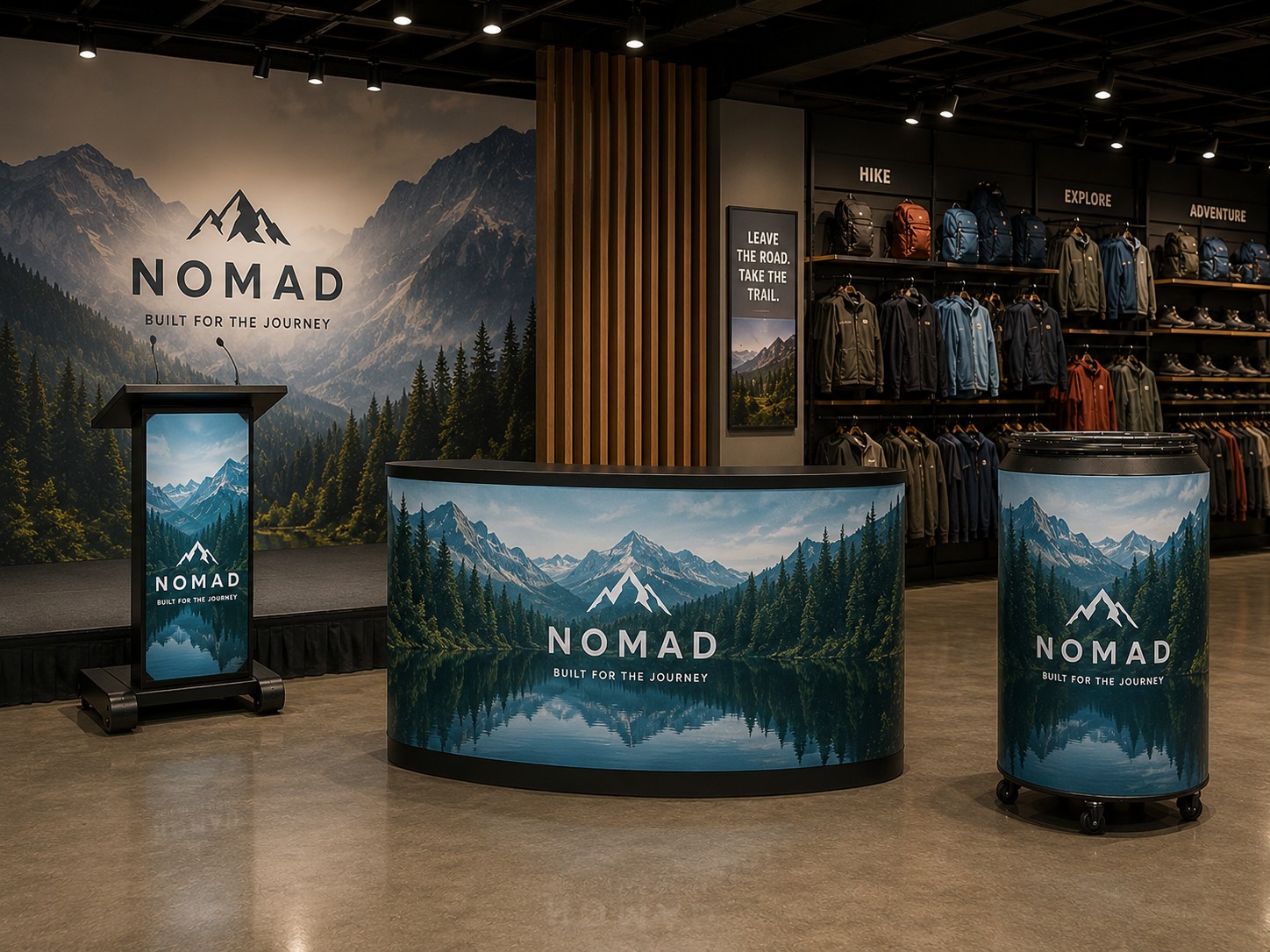
Most businesses shopping for illuminated displays focus on size and price. The decision that actually determines whether the display earns its place on the stand or in the reception is none of those things, it is whether the illumination holds uniform brightness edge to edge at two metres distance under the variable light conditions of a real exhibition hall or corporate lobby.
That is the question this guide answers, alongside everything else a UK buyer needs before committing to an LED light box purchase.
What Is an LED Light Box?
An LED light box is an illuminated display panel that uses light emitting diodes to backlight or edge-light printed or digital graphics. The core advantage over older fluorescent technology is efficiency: LEDs use up to 75 per cent less energy than standard fluorescent equivalents, and quality LED modules last up to 50,000 hours, significantly reducing maintenance costs compared to fluorescent lights which typically required tube replacement every 6,000 to 15,000 hours.
For UK businesses, this matters commercially. A display running at an exhibition for five days, or illuminating a reception wall permanently, is a piece of infrastructure, not a consumable. The UK government banned the sale of most pin based fluorescent lamps in September 2023 as part of its broader energy efficiency programme. Fluorescent lightboxes are not coming back. LED is the standard.
Types of LED Light Box Available in the UK
Fabric LED Light Boxes
The dominant format for exhibitions and retail environments. A printed fabric graphic is stretched over an aluminium frame with integrated LED strips running around the perimeter or across a rear panel. Graphics are tool-free to swap, which makes them the preferred choice for brands that update messaging each season or at every event. Standard sizes run from A1 through to large format modular systems at 3x3m and beyond.
The critical buying variable here is diffuser quality. A cheap edge-lit frame will show hotspots at the corners where the LED strips sit closest to the fabric face. A well-engineered frame distributes light evenly to the centre of even a wide panel. Ask suppliers for a lit sample before committing to a large format order.
Rigid Face LED Light Boxes
Use an acrylic or polycarbonate face with edge-lit or back-lit LED arrays behind. More durable than fabric for permanent installations, reception signage, retail fascias, wayfinding systems, menu boards. Less flexible for graphic changes, but suited to long-term fixed signage where the message is stable and durability matters more than speed of swap.
LED Lightbox Displays for Exhibitions
Designed specifically for portability and fast venue assembly. Typically feature tool free snap frame or tension fabric construction, carry bag packaging, and pre-wired LED modules that run from a single IEC mains lead. Double-sided versions are standard for island stand builds where visibility from multiple directions is required.
LED Lectern Displays
A format gaining significant traction in UK corporate events and conference environments. A free-standing LED illuminated lectern with replaceable branded graphic panels creates a premium stage presence that a plain wooden lectern cannot match. Boardsy’s LED lectern displays are built for repeated multi-event use, with stable base construction suited to AV-heavy conference environments and quick change branding between sessions.
LED Reception Desk Displays
Modular illuminated counters used in corporate lobbies, hotel check-ins, and exhibition welcome areas. The LED illumination delivers a premium finish at a fraction of the cost of bespoke joinery, and the modular construction means the same unit ships flat and assembles on site in under 30 minutes. Boardsy supplies LED reception desk systems sized for B2B buyers who need a consistent branded presence across multiple venue types.
LED 360 Cylinder Displays
A circular illuminated column format used as a centrepiece for exhibition stands or retail floor installations. The 360-degree visibility is the specific advantage in an open plan exhibition hall where footfall approaches from any direction, a flat back wall display captures only a fraction of the audience a freestanding cylinder reaches.
Key Buying Considerations
Single-Sided vs Double-Sided
Single-sided light boxes work for wall-mounted installations or where viewing is from one direction only. Double-sided units hang from ceiling rigging or stand freestanding and are visible from both faces. The cost premium for double-sided is typically 30 to 50 per cent over single-sided equivalents, justified for island stands and high footfall aisle positions, unnecessary for perimeter wall builds.
Fabric vs Rigid Graphics
Fabric graphics are cheaper to reprint, easier to transport wrinkle-free when rolled into a tube carry case, and tension correctly to a smooth finish when properly fitted. Rigid acrylic faces offer a sharper, more permanent look for fixed signage but are heavier in transit and more fragile under repeated handling. For buyers who exhibit more than three times per year, fabric is almost always the right choice on pure operational grounds.
Frame Depth and Illumination Profile
Slim profile frames (30 to 50mm depth) suit wall-mounted retail and office environments where protrusion from the wall needs to be minimal. Deeper frames (80 to 100mm) allow for more LED modules and brighter, more uniform illumination across larger panel size, the standard for exhibition use where ambient light competition from venue lighting is high.
IP Rating for Outdoor Use
Standard LED light boxes carry no IP rating and are indoor only. For outdoor use in UK conditions, specify IP65 or above to protect against rain ingress. Most exhibition and retail models available from UK suppliers are not suitable for external installation without explicitly upgrading to weatherproof variants. This is a common and expensive oversight.
Power and Cabling at Venues
Most UK LED light boxes run on standard 240V mains with a single IEC lead per section. For multi-panel exhibition builds, confirm whether daisy chaining is supported, this determines how many mains drops you need to book with the venue electrician, which is a direct cost item on most UK exhibition hall contracts.
Graphic Lead Times
LED light box frames can typically be delivered within 5 to 10 working days. Printed fabric graphics add 3 to 5 working days depending on the supplier’s print queue. For exhibition deadlines, order frames and graphics simultaneously and confirm artwork deadlines upfront with your supplier. The most common cause of last minute exhibition stress is not the frame, it is the graphic print arriving late because artwork was signed off too close to the deadline.
LED vs Fluorescent: The Practical Comparison
The comparison is largely academic now given the UK phase out of fluorescent lamps, but for buyers replacing existing fluorescent lightboxes, the numbers are worth having.
| Factor | LED Light Box | Fluorescent Lightbox |
|---|---|---|
| Energy consumption | Up to 75% lower | Higher baseline |
| Lifespan | Up to 50,000 hours | 6,000 to 15,000 hours |
| Heat output | Minimal (95% energy converted to light) | Significant heat waste |
| Illumination evenness | High with quality diffuser | Variable, prone to banding |
| Maintenance | Near zero in normal use | Tube replacement required |
| Mercury content | None | Present, disposal regulated |
| UK availability | Standard | Being phased out |
LED lights convert approximately 95 per cent of their energy into light with only 5 per cent wasted as heat, a meaningful difference for displays running continuously in a heated reception environment or during a multi-day exhibition.
What Do LED Light Boxes Cost in the UK?
Pricing varies significantly by size, format, and order volume:
- Small fabric light boxes (A1 to A0): £80 to £200 per unit
- Exhibition tension fabric displays (2x2m to 3x3m): £300 to £800 per section
- LED lectern displays: £400 to £900 depending on configuration
- LED reception desk systems: £600 to £1,500 for modular counter setups
- LED 360 cylinder displays: £500 to £1,200 depending on height and diameter
- Custom large format installations: priced on application
Volume discounts are standard for trade buyers purchasing multiple units or full stand packages. B2B buyers should request a quote rather than purchasing at list price, particularly for exhibition packages combining multiple display formats where bundle pricing typically applies.
Frequently Asked Questions
Can LED light boxes be used outdoors in the UK?
Standard LED light boxes are indoor only. For outdoor use, specify IP65-rated units with weatherproof sealing. Most exhibition and retail models available from UK suppliers are not rated for external installation.
How long do LED light box graphics last?
Printed fabric graphics typically last 3 to 5 years under normal indoor use before colour fading becomes noticeable. They can be reprinted independently of the frame, making the aluminium frame a long term capital asset and the graphic a consumable with a predictable replacement cycle.
How long does an LED light box take to assemble?
Exhibition grade fabric light boxes are designed for tool free assembly, typically taking one person 10 to 20 minutes per section. Rigid face units for permanent installation may require basic tools and wall fixings but are a one time installation.
Can I supply my own artwork?
Yes. Most UK suppliers accept print-ready artwork in PDF or Adobe Illustrator format at the correct dimensions with 3mm bleed. Request the artwork template from your supplier before briefing your designer, fitting a graphic to a frame requires exact panel dimensions, not the nominal display size.
What warranty should I expect on an LED light box?
Reputable UK suppliers offer 12 to 24 month warranties on LED components. Fabric graphics are consumables and are not typically covered beyond manufacturing defects on arrival.
What is the difference between edge-lit and back-lit LED light boxes?
Edge-lit units have LEDs running along the frame perimeter, directing light through an acrylic diffuser panel. Back-lit units have LED arrays mounted directly behind the graphic face. Back-lit systems generally produce more even illumination on larger panel sizes (above 1.5m width) because the light source is distributed across the full face rather than travelling inward from the edges.
Are LED light boxes good for permanent reception installations?
Yes, the low heat output, 50,000 hour lifespan, and minimal maintenance requirement make LED light boxes well-suited to permanent installations. A reception wall display running 10 hours per day, 250 days per year, will reach 50,000 hours after approximately 20 years of use without LED replacement.
For B2B pricing and product enquiries, visit boardsy.co.uk or use the quote request form to get a tailored package for your exhibition stand or installation project.