
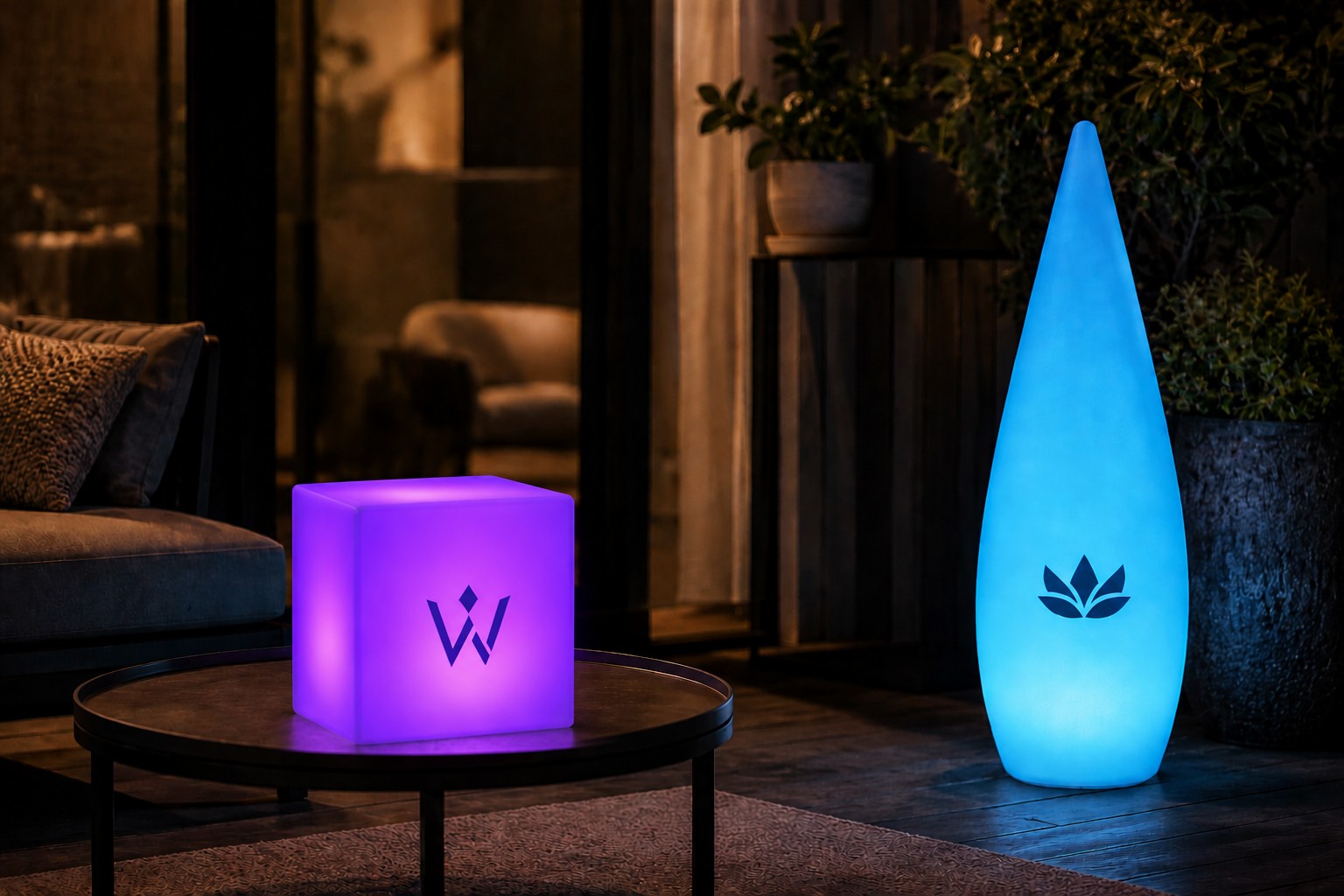
A custom LED light box is a wireless, illuminated display unit built from shatterproof PE plastic, personalised with your logo or artwork and powered by a rechargeable battery rather than a mains cable. It is used across exhibitions, retail counters, hospitality venues and brand activations because it delivers consistent, edge lit illumination without the trip hazards or setup time of traditional lighting rigs.
This guide covers what a light box actually is, how the different formats compare, what to check before ordering one, and where it fits against alternatives such as printed signage or acrylic display cases.
What Is an LED Light Box, Exactly
An LED light box is a hollow, illuminated unit with LEDs positioned around the inside edge so that light spreads evenly across the surface rather than creating hot spots in the middle. The outer panels carry your branding, printed with UV resistant laminated graphics that hold their colour under repeated use.
Boardsy builds its LED cube light box from a single mould of solid PE plastic rather than glued acrylic panels, which is the main reason it survives repeated transport between venues without cracking at the seams. Larger cube models are rated to hold up to 80 kilograms, so they double as a plinth or even a seat at busy events.
Wireless Operation and Battery Life
Most modern light boxes run on a rechargeable battery rather than mains power, typically giving around 8 hours of runtime on a full charge. This matters more than it sounds: a mains cable across a shop floor or exhibition aisle is both a trip hazard and a visual distraction from the branding you are trying to showcase.
Waterproofing and Outdoor Use
An IP65 rating confirms genuine resistance to rain and dust, not just light splashes. If you plan to use a light box outdoors, at a food festival, market stall or outdoor bar, check this rating specifically rather than assuming any illuminated display is weatherproof by default. Boardsy’s cube range carries IP65 as standard, which allows use in direct sunlight, rain and cold temperatures without damage to the internal electronics.
Light Box Shapes and Formats Compared
Light boxes are not limited to a single shape. The right format depends on where the unit will sit and what job it needs to do.
- Cube light boxes suit retail counters, exhibition stands and photo points where a symmetrical, logo forward surface works best.
- Standing or tall light boxes give more vertical branding space and work well as freestanding signage near entrances.
- Sphere and round formats create a softer, more ambient look, often chosen for hospitality and wedding settings.
- Table sized boxes double as illuminated centrepieces rather than full height signage, useful when floor space is limited.
If your priority is a taller freestanding display rather than a tabletop unit, Boardsy’s custom LED standing lamp is worth comparing against the cube range, since it offers a different footprint for entrance areas and photo backdrops.
Choosing Between Light Box Wholesale Orders and Single Units
Businesses ordering for a single event or a single retail location generally want one or two bespoke units with a fast turnaround. Businesses fitting out multiple sites, or ordering for franchise rollouts, tend to ask about wholesale pricing on larger quantities.
For wholesale style orders, three things affect price and lead time the most:
- Total unit count and whether all units share one design or need individual branding
- Custom dimensions outside the standard size range
- Delivery deadline relative to production capacity
Requesting a free mockup and transparent quote before committing to volume avoids the common mistake of ordering stock sizes that do not suit the venue.
Light Box Replacement Graphics and Maintenance
A light box is a long term asset rather than a single use prop, so the ability to replace printed graphics without buying a new unit matters for repeat use across seasons or campaigns. Because the PE plastic shell is built separately from the printed panel, replacement graphics can usually be swapped in when a brand refreshes its look or a new campaign message is needed, without discarding the underlying illuminated structure.
Light Box Reviews: What Buyers Actually Care About
Across genuine buyer feedback for illuminated display furniture, three themes come up repeatedly:
- Durability under transport. Units that survive being packed, moved and reassembled across multiple events score higher than units that look good once and crack on the second outing.
- Colour accuracy of the branding. Laminated, UV resistant printing holds logo colours more reliably than unprotected prints, which fade or yellow within a few months of regular use.
- Genuine wireless operation. Buyers specifically call out units that claim to be wireless but still need a nearby plug for charging mid event, versus units with battery life that comfortably covers a full day.
“Those cubes and standing boxes really grabbed attention at our exhibition.”
Frequently Asked Practical Questions
Is a light box the same as a lightbox sign? They serve a similar purpose (illuminated branding) but a light box is typically a freestanding or tabletop furniture piece, while a lightbox sign more often refers to wall mounted or hanging signage.
Can a light box be used indoors and outdoors? Yes, provided it carries an IP65 rating or higher. Always confirm this before booking outdoor use.
How long does delivery take? Lead time depends on whether you are ordering a stock size or a bespoke dimension. Contact the team directly for a current turnaround estimate against your event date.
Ready to see your own branding on a light box before you commit to an order? Boardsy’s LED cube light box range includes a free mockup and transparent quote, so you can check colours and sizing before production begins.
For a freestanding option, the LED cube light box is our most-ordered format for exhibitions and venues.